

 See My Latest Article on HelloNation
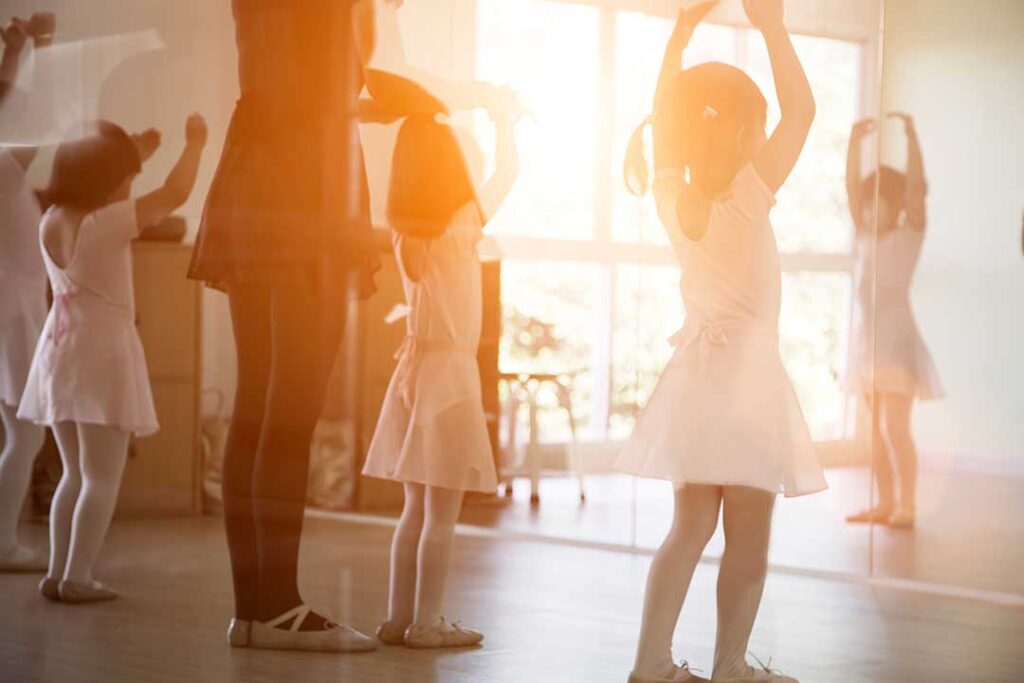
Dance can help people build confidence by giving them repeated opportunities to practice, make choices, manage mistakes, and experience progress. For residents of Oak Creek, WI, dance may be part of a child’s after-school routine, a teen’s creative outlet, or an adult’s effort to feel more comfortable moving in a group.
Confidence does not appear all at once. It usually develops through small, consistent experiences in which a person feels supported enough to try, adjust, and try again.
How does dance build confidence?
Dance builds confidence by connecting physical practice with visible progress. A dancer may begin by learning a simple rhythm or position, then gradually perform longer combinations, remember choreography, or move with greater control.
That progress provides concrete evidence of improvement. Instead of relying only on general encouragement, dancers can recognize specific accomplishments, such as:
- Performing a step that once felt difficult
- Staying with a combination after making a mistake
- Dancing in front of a small group
- Remembering choreography without constant prompts
- Helping a newer student understand an exercise
These experiences strengthen self-trust. A person begins to understand that ability is not fixed and that discomfort during learning does not necessarily mean failure.
Why is making mistakes useful for confidence?
Mistakes are a normal part of dance education. A missed count, incorrect direction, or balance problem gives the dancer information about what to practice next.
Healthy dance instruction treats mistakes as part of learning rather than as evidence that someone does not belong. This distinction matters, especially for children and beginners who may be sensitive to comparison.
A useful response to an error might be:
1. Pause and identify what happened.
2. Break the movement into a smaller part.
3. Practice slowly or without music.
4. Repeat the movement with one clear focus.
5. Notice improvement rather than expecting immediate perfection.
This process teaches resilience. The dancer learns that embarrassment can pass, correction is manageable, and a mistake does not define the quality of the entire experience.
Can dance help shy children and teens?
Dance can help shy children and teens, although the experience varies by personality and teaching environment. Some participants become more comfortable speaking and performing over time. Others may gain confidence in quieter ways, such as standing with better posture, participating more consistently, or feeling less worried about being watched.
A supportive setting usually includes clear instructions, predictable routines, and reasonable opportunities to perform without forcing someone into the center before they are ready. Confidence grows more reliably when participation feels challenging but not overwhelming.
Parents and caregivers can support this process by asking specific questions:
- What movement felt easiest today?
- What did you practice more than once?
- Did anything feel difficult but become clearer?
- How did you respond after making a mistake?
Questions like these focus attention on effort, problem-solving, and self-awareness rather than appearance or comparison with other dancers.
What role does performance play?
Performance can strengthen confidence because it gives dancers a meaningful reason to prepare and focus. It also introduces pressure, so the experience should be matched to the dancer’s age, readiness, and comfort level.
A performance does not have to mean a large public event. It might be a short demonstration for a class, a family sharing, or a small group presentation. These lower-pressure settings allow dancers to practice being seen while still having support nearby.
Before a performance, it helps to separate controllable factors from uncontrollable ones. Dancers can control preparation, breathing, attention, and recovery after a mistake. They cannot control every sound, distraction, or audience reaction.
A simple pre-performance routine may include:
- Taking two or three slow breaths
- Reviewing the first movement or starting position
- Relaxing the shoulders and hands
- Focusing on the rhythm instead of the audience
- Reminding oneself that recovery is part of performing
The goal is not to eliminate nervousness. The goal is to learn that nervousness can be present without stopping participation.
How can dance improve body confidence?
Dance can support a healthier relationship with the body when instruction emphasizes function, expression, coordination, and personal progress. Dancers learn what their bodies can do: balance, turn, stretch, jump, shift weight, and communicate an idea through movement.
Body confidence is different from believing that every physical feature looks a certain way. It is more closely related to comfort, awareness, and respect for the body.
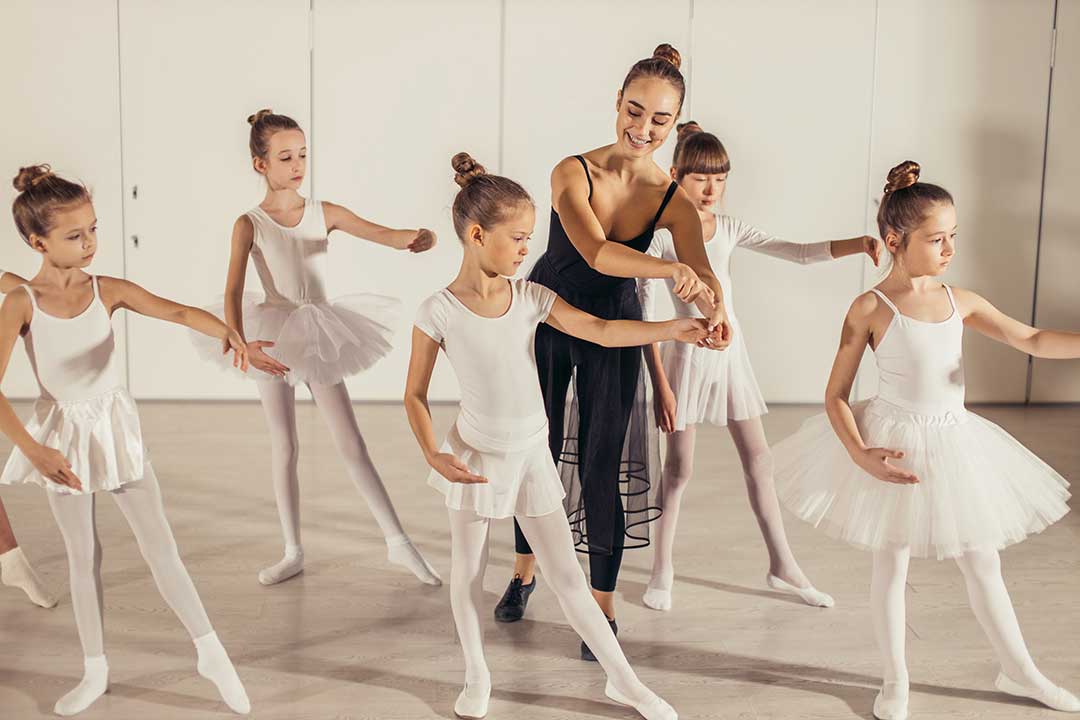
Adults and instructors can help by avoiding comments that rank bodies or connect ability with a particular appearance. More constructive language describes effort and technique:
- “Your balance improved during that repetition.”
- “You kept your focus through the difficult section.”
- “Your movement became clearer when you used your breath.”
- “You adjusted well after losing the rhythm.”
For growing children and teens, this approach is especially valuable because bodies change naturally over time. Dance should make room for different body types, learning speeds, physical abilities, and comfort levels.
Does group dance improve social confidence?
Group dance can develop social confidence because it requires awareness of other people. Participants learn to share space, match timing, take turns, communicate nonverbally, and contribute to a shared result.
These skills can transfer to other settings, including classrooms, workplaces, community activities, and family events. A dancer may become more comfortable introducing themselves, asking a question, or participating in a group discussion after gaining experience cooperating through movement.
Group settings also teach an overlooked lesson: confidence is not always about standing out. Sometimes it means staying connected to the group, supporting a partner, or accepting a role that helps the whole performance succeed.
For residents managing busy schedules, a consistent class can also provide a regular social routine outside school or work. During colder months, when outdoor activity may be less predictable, indoor movement can offer structure and connection.
How can beginners build confidence without feeling pressured?
Beginners can build confidence by choosing manageable challenges and tracking progress over time. Starting with a level that allows meaningful participation is usually more helpful than selecting an advanced setting simply because it appears impressive.
Helpful habits include:
- Attend consistently enough to remember the basic routine.
- Wear comfortable clothing that allows safe movement.
- Practice one or two skills between sessions rather than everything at once.
- Compare current ability with past ability, not with another dancer.
- Celebrate recovery, patience, and concentration as well as technical success.
- Tell the instructor when a movement causes pain, confusion, or unusual anxiety.
Confidence often grows faster when goals are specific. “Become better at dance” is difficult to measure. “Remember the first eight counts,” “keep steady balance for three seconds,” or “perform one combination without stopping” creates a clear and realistic target.
What should families watch for in a healthy learning environment?
A confidence-building dance environment should provide challenge without humiliation. Instruction should include corrections, but feedback should be specific, respectful, and appropriate for the dancer’s age.
Warning signs may include frequent public embarrassment, pressure to continue through pain, constant body comparison, or expectations that every participant must perform at the same pace. A dancer may be challenged while still feeling safe enough to ask questions and make mistakes.
The most useful measure of progress is not whether a person appears fearless. It is whether the dancer is increasingly willing to participate, solve problems, accept feedback, and try again. Those habits can remain valuable long after a particular routine or class has ended.